

Flower Care Tips: How to Keep Your Valentine’s Day Flowers Alive
Valentine’s day flowers care tips to make them last longer than the holiday. Learn a step-by-step guide and myth-busting advice for a lasting bouquet.
By:
The Good Home Daily
Posted on February 5, 2026
Flowers are arguably the best gift you can give for Valentine’s Day. They speak a universal language of affection. The only problem is that most Valentine’s Day flowers don’t last as long as we hope.
Roses, for instance, have a vase life of about 7 to 10 days, but that’s only if they receive proper care. So, if you are a giver who bought flowers early or a lucky recipient of a surprise delivery, you’ve suddenly become a caretaker of something beautiful and incredibly fragile.
Don’t worry. In this guide, we’ll teach you exactly how to take care of your Valentine’s Day flowers so they stay vibrant for as long as possible. From choosing the right environment to storing them after delivery, these expert tips will help your blooms look as fresh as the moment they left the shop.
Early Buyers Tips: How to Take Care of Flowers Bought Before Valentine’s Day

Buying your flowers a few days early is a smart move. It beats the price hikes and ensures you get the best stems. However, the moment those flowers leave the shop, the countdown to keep them fresh begins.
Here’s how to care for your early Valentine’s bouquet so that beautiful surprise stays beautiful.
1. Keep the Bouquet Cool
Temperature plays a huge role in how long flowers last after being cut. While there’s no single perfect temperature for every flower, most do best in cool conditions. Cooler temperatures slow down the natural aging process, helping blooms retain moisture, color, and freshness longer.
Many cold storage providers recommend storing flowers at around 1–3°C (34–38°F). That’s why florists often keep Valentine’s bouquets in walk-in coolers or dedicated flower refrigerators. When flowers sit in warm rooms for too long, their vase life starts shortening even before they are displayed or gifted.
2. Avoid Direct Sunlight and Heat Sources
As mentioned, temperature and sunlight are the biggest factors in flower freshness. So, avoid placing your bouquet near windows, heaters, or warm rooms. Even when wrapped, flowers are sensitive to heat, which can shorten their vase life before they’re even gifted.
If you want your Valentine’s flowers to last longer, store them in a shaded, cool spot. This helps maintain their hydration and firmness.
3. Leave the Bouquet Wrapped
If the Valentine’s Day bouquet you bought is still wrapped, keep it that way. The wrapping protects stems and petals from bumps, pressure, and moisture loss.
Tightly bundled bouquets are less likely to experience bruising or loose buds, so leaving the wrap intact helps your flowers stay fresh and perfect until it’s time to gift or display them.
4. Minimize Handling
Every time a bouquet is moved, lifted, or touched, delicate petals and stems are at risk of bruising or loosening. Even small disturbances can affect how long flowers stay firm and fresh.
By keeping handling to a minimum, you reinforce the benefits of cool, shaded, and protected storage. Combined with proper wrapping and storage, this simple habit significantly extends the bouquet’s freshness until Valentine’s Day.
5. Store Flowers Away From Fruits
Ripening fruits release ethylene, a plant hormone that speeds up aging in cut flowers and even potted plants. In high concentrations, it can cause petals to drop, colors to fade, and stems to weaken.
For early buyers, keep Valentine’s bouquets away from fruit bowls, kitchen counters, or storage areas with ripening produce. This simple step helps maintain the structure and appearance of petals and stems until the bouquet is ready to be unwrapped and displayed.
6. Choose a Dry, Well‑Ventilated Spot
High humidity can promote mold or petal damage, while still air encourages condensation around wrapped bouquets. To prevent this, choose a dry, well-ventilated spot that preserves the condition of the stems and petals until you are ready to gift them.
By ensuring the air stays dry and moving, you create the perfect balance needed to maintain freshness and prevent premature decay before the big day.
6 Steps to Take Care of Your Valentine’s Bouquet After Receiving It
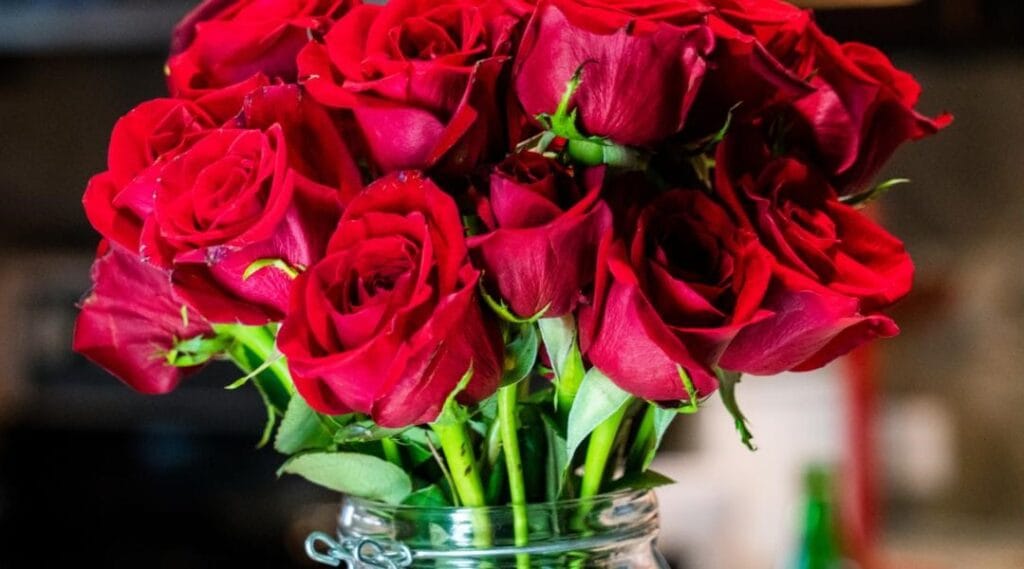
Now that we’ve covered the buying side, let’s talk to the lucky people receiving the bouquets. First of all—congratulations! Someone clearly thinks the world of you.
If you want to know how to keep your Valentine’s Day flowers alive and beautiful, just follow these simple flower care tips. Here are the steps to keep your bouquet looking just as stunning as the moment it arrived.
1. Trim the Stems at an Angle
As soon as you unwrap your bouquet, your first priority should be trimming the stems. When flowers sit out of water, air and bacteria can block the stems, making it hard for the blooms to drink.
Use sharp scissors to cut about 1–2 inches off each stem at a 45-degree angle. Cutting at an angle provides more surface area for hydration and prevents the stems from sitting flat against the bottom of the vase. This simple trick ensures your flowers can absorb water efficiently to stay fresh and vibrant.
2. Place Flowers in Fresh, Clean Water
Once you’ve trimmed the stems, place your flowers into a clean vase filled with fresh, room-temperature water. Even if your bouquet arrived with a small hydration pack on the stems, that water can quickly grow bacteria, so a fresh start is essential for bloom health.
To make your Valentine’s flowers last longer, make it a habit to refresh the water every day or two. This routine keeps the water clear and ensures your Valentine’s Day flowers stay vibrant and hydrated.
3. Use Flower Food
Most florist bouquets come with a small packet of flower food tucked inside the wrapping. Don’t toss it out! It contains the perfect mix of nutrients to feed the blooms and specialized ingredients to slow down bacterial growth in the water.
Simply mix the packet into your fresh water according to the instructions. If your bouquet didn’t come with one, you can make a quick DIY version at home!
Stir a teaspoon of sugar (for food) and a few drops of lemon juice or a tiny drop of clear bleach (to kill bacteria) into your vase. This simple step ensures your blooms stay vibrant and hydrated for days longer than water alone.
4. Keep Them Cool and Away from Direct Sunlight
Just as temperature and shade mattered before gifting, they continue to matter after the bouquet is displayed. Warm rooms and direct sunlight increase water loss, causing petals to wilt.
Placing your vase in a cool, shaded spot complements earlier steps like trimming and clean water care, helping your flowers retain color, moisture, and stem strength.
5. Remove Leaves Below the Waterline
Before you place your bouquet in the vase, check the stems for any low-hanging leaves. Any foliage submerged in the water can quickly rot and cause bacteria to grow. This clogs the stems and makes it much harder for your flowers to stay hydrated.
Simply strip off any leaves that would sit below the water level. This keeps the water crystal clear and ensures your flowers can drink efficiently. Not only does this help your bouquet stay healthy for its maximum vase life, but it also makes your arrangement look much more polished and professional!
6. Give Them Space and Handle with Care
It’s tempting to constantly adjust your new arrangement, but frequent handling can actually bruise delicate petals and weaken the stems. To keep your flowers looking their best, find a permanent home for your vase and let them settle..
It’s also important to avoid crowding your flowers into a vase that is too small. Blooms need a little breathing room for air to circulate; if they are packed too tightly, they can become stressed and wilt faster.
7 Common Misconceptions About Valentine’s Day Flower Care
There’s a lot of advice floating around about how to keep flowers fresh. Unfortunately, not all of it is helpful, and some tips can actually shorten the life of your Valentine’s bouquet.
Let’s clear up a few common misconceptions so your flowers get the care they really need.
1. The Aspirin Trick
The Myth: Dropping a crushed aspirin into the water lowers the pH and helps the roses drink.
The Reality: While aspirin is acidic, it is not a stable solution for flowers. In many cases, the dosage is too high, leading to “salt burn,” which turns the leaves yellow and actually blocks water absorption.
Skip the medicine cabinet. Professional flower food is engineered with the exact balance of acidifiers flowers need.
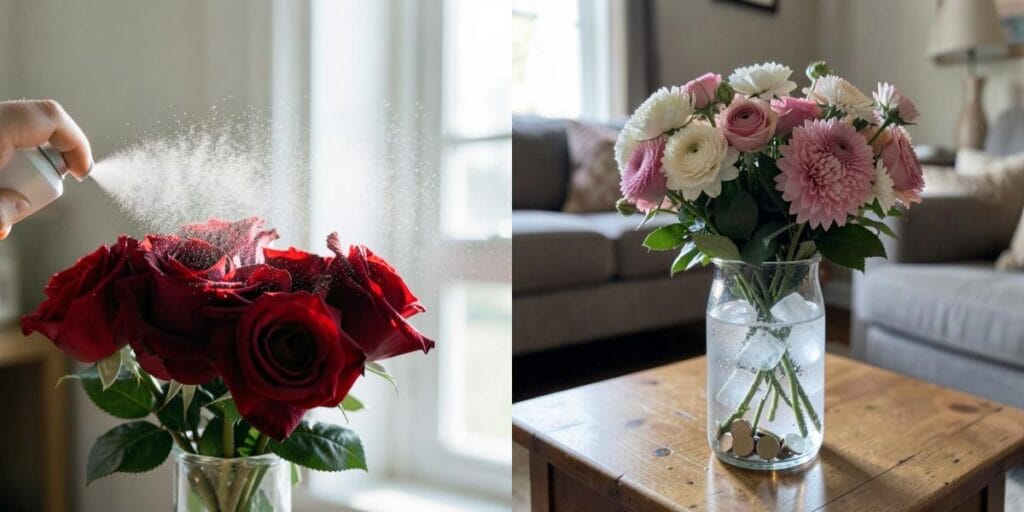
2. The Penny in the Vase
The Myth: The copper in a penny acts as a natural fungicide to keep the water clear of bacteria.
The Reality: This was true decades ago when pennies were mostly copper. Today, pennies are primarily zinc with a thin coating. They don’t release enough copper to have any effect on bacterial growth in your vase.
3. Using Hairspray on Petals
The Myth: A quick spritz of hairspray will “lock” the petals in place and prevent them from falling off.
The Reality: This is one of the most damaging myths. Flowers are living organisms that need to “breathe” through tiny pores. Hairspray seals these pores, suffocating the flower and causing it to turn brown almost overnight.
4. Soda and Lemon-Lime Drinks
The Myth: Adding a splash of clear soda provides the sugar and acidity flowers need to thrive.
The Reality: This actually has some merit, as the sugar provides energy. However, sugar is also the primary food source for bacteria. If you use soda without an antibacterial agent (like a drop of bleach), your water will become a breeding ground for rot within 24 hours.
5. Wilting Flowers Cannot Be Revived
The Myth: Once flowers start drooping, they cannot recover.
The Reality: This is not always true. Early wilting is often caused by dehydration or blocked stems rather than age. Re-trimming the stems and replacing the water can often restore firmness if done early.
6. More Water Means Longer Vase Life
The Myth: Filling the vase to the brim automatically helps flowers last longer.
The Reality: This is wrong. Water quality matters more than quantity. Dirty water encourages bacterial growth, which clogs stems and prevents proper hydration. Regular water changes are far more effective than simply adding more water.
7. Ice-Cold Water Is Best for Cut Flowers
The Myth: The colder the water, the better it is for flower longevity.
The Reality: This is true but risky. Extremely cold water can shock freshly cut stems, especially after trimming. Room-temperature water allows flowers to absorb moisture more efficiently and is generally safer during the first few hours after receiving a bouquet.
Take Care of Your Valentine’s Day Flowers to Make Them Last Longer
Valentine’s Day flowers may be beautiful, but they are also delicate. Whether you bought them early or received them as a thoughtful gift, proper care makes a real difference in how long they stay fresh.
By keeping flowers cool, handling them gently, and giving them the right environment, you can extend their vase life and enjoy them well beyond Valentine’s Day. A little attention goes a long way in preserving both their beauty and the sentiment behind them.
Valentine’s Day Flower Care: FAQs
How long do Valentine’s Day roses last?
Roses typically last 7 to 10 days with proper care. Keeping stems trimmed, water clean, and flowers in a cool environment can help extend their freshness. Some hardy varieties may even last a few days longer if handled gently.
How often should I change the water?
You should change the water every 1–2 days, especially if it becomes cloudy or starts to smell. Fresh water prevents bacteria from building up, which helps stems absorb moisture efficiently and keeps petals vibrant.
What should I do if my flowers start wilting early?
Early wilting often indicates dehydration or clogged stems, not that the bouquet is finished. Re-trimming stems, refreshing the water, and removing leaves below the waterline often revive flowers.