
How to Decorate Rooms with Indoor Plants? 12 Stylish Placements You Can Try
Explore easy indoor plant decor ideas and smart placement tips to transform any room. Learn where to place houseplants for a more stylish, balanced home.
By:
The Good Home Daily
Posted on May 15, 2026
Who wouldn’t want to bring more plants indoors? They instantly make a space feel fresher, more lived-in, and even more productive. In fact, research shows that adding greenery to a workspace can increase productivity by up to 15%. But while it is easy to buy a new plant, figuring out where to place indoor plants is where most people get stuck.
For one, different plants come with their own needs. At the same time, finding the right spot where they actually enhance the room is a different challenge altogether.
Put the plant in the wrong place, and the entire setup can feel off. A corner can look overcrowded instead of styled, shelves can feel cluttered instead of curated, and statement plants can lose their impact when they blend into the background.
Don’t worry! In this guide, we will show you exactly where to place indoor plants at home so they work as thoughtful design elements, not just extra decor.
12 Easy Plant Decoration Ideas at Home
1. Place a Tall Plant Beside the Sofa
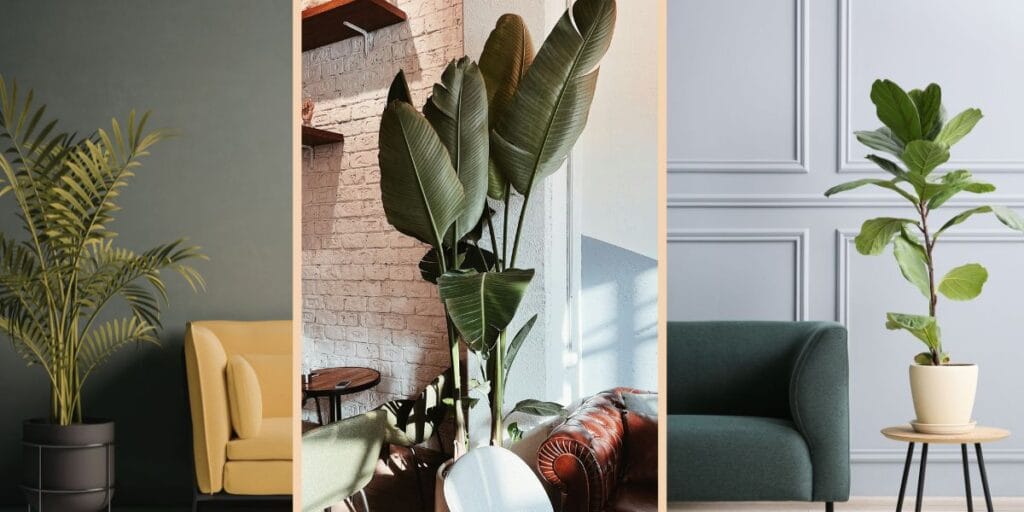
A tall plant works best when placed right beside your sofa or at the end of a seating arrangement. This spot helps anchor the layout, especially in living rooms. Instead of leaving that side empty, a plant adds height and creates a visual boundary, making the space feel more complete.
A great example of this setup is a fiddle leaf fig. These plants can reach over 5 feet in height and feature massive violin-shaped leaves. It has a structured shape, so it stands out as a design feature. When placed next to large furniture pieces, it helps them feel integrated rather than randomly placed.
2. Style a Plant Cluster in an Empty Corner
Empty corners often get overlooked, but they are one of the easiest areas to transform with plants. Instead of placing a single piece, group two to three plants.
This can be challenging to execute without cluttering the space. For this to work, you must understand how to layer your plants.
The most effective technique is to select plants with varying heights. Position the tallest plant at the back, a medium-sized one to the side, and a smaller variety in front. This creates a layered effect that feels intentional rather than scattered. You can also use stands or stools to create depth.
Another plant design trick is to mix different leaf shapes and growth habits. For example, you can combine a Monstera deliciosa as your main plant, a snake plant for vertical contrast, and a pothos to introduce a trailing element. This combination works because each plant brings a different shape and movement.
3. Add Small Plants on Coffee Tables
Coffee tables are ideal for small plants that add detail without dominating the surface. To create a relaxed, natural arrangement, avoid placing a single plant dead-center. Instead, position it slightly to one side and pair it with a book stack or a decorative tray.
This plant design trick breaks up the flat surface and adds a touch of greenery while keeping the area functional for everyday use.
For this setup, succulents and jade plants are ideal choices due to their compact size and clean forms. Just remember not to overcrowd the table. Leave enough functional space so the plant feels like part of the setup.
4. Use a Bonsai as a Sculptural Centerpiece
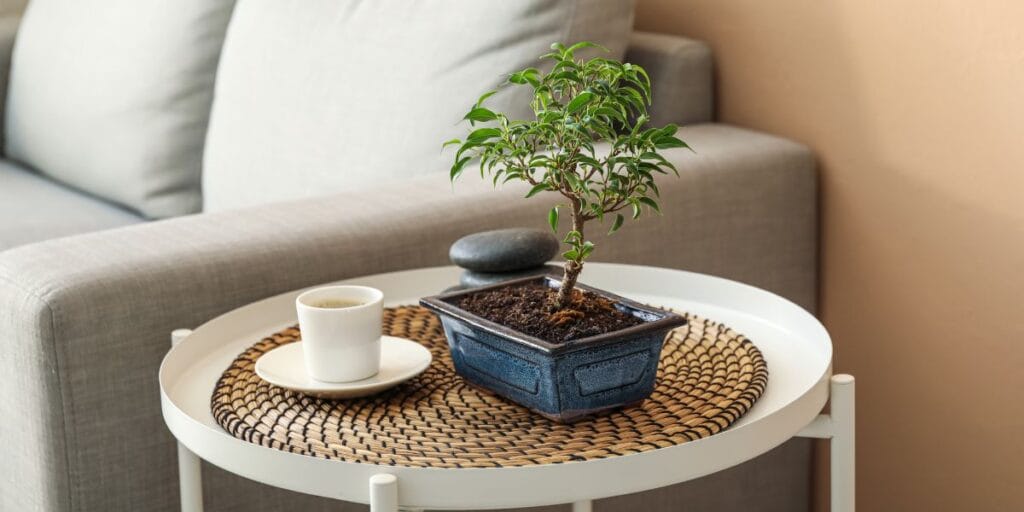
Using a bonsai as a centerpiece is one of the most effective plant decor ideas. Unlike many smaller plants that thrive when placed off-center, a bonsai works best as a focal point.
Place it at the center of a coffee table, console, or entryway table where it can be viewed from all sides.
Because of its unique, sculptural silhouette, a bonsai naturally draws the eye. To allow it to truly stand out, keep the surrounding decor minimal. This placement is especially effective in spaces with clean lines, as the tree provides a striking organic contrast without overwhelming the room’s design.
5. Match Plant Size to Ceiling Height
Don’t let those high ceilings go to waste! Treat them as an opportunity to introduce larger, tree-like plants that can fill the vertical space. Placing a tall plant in these open areas helps highlight the room’s height.
Plants such as a bamboo palm or dracaena work well for this setup because of their upward growth and structured form. They can act as a bridge between the floor and the ceiling. This keep your space feeling balanced and perfectly pulled together.
6. Add a Floor Plant Near the Window
Windows are not just sources of light; they are natural styling anchors. Instead of crowding the view, place a floor plant around them. This plant decor idea frames the natural light and enhances the connection between indoors and outdoors.
You can place taller plants on one side and smaller trailing plants on the sill or nearby surfaces to create balance. This mix of heights creates a softer, more organic feel in the room.
7. Use Hanging Plants For Smaller Rooms
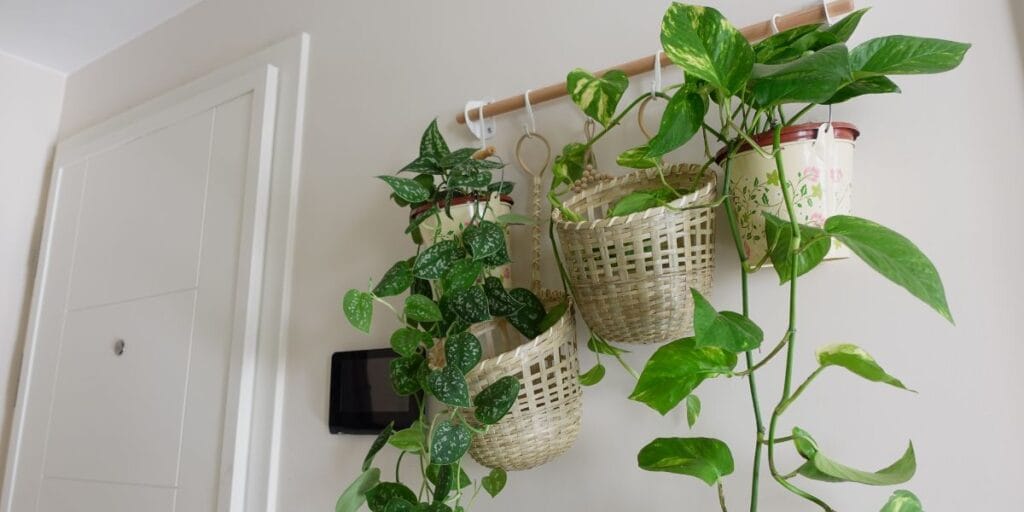
If you’re a bit short on floor space, hanging plants are a practical way to decorate without adding clutter. Place them near windows, above side tables, or along empty walls to draw the eye upward and make the room feel taller.
This approach is so helpful because it spreads the leafy vibes throughout the room instead of keeping everything at eye level. By making use of your vertical space, you create a more layered and interesting setup.
8. Place Herbs on the Kitchen Counter
The kitchen counter is one of the best spots for a few fresh herbs. Not only do they work as a lovely decor, but they also serve a real purpose in your daily cooking!
Instead of filling your counter space with items that are just for show, try grouping a few herbs near your backsplash or right beside the areas you use most. This keeps them within easy reach while giving your kitchen a fresh, lived-in feel.
Basil, rosemary, and mint are excellent choices because they stay nice and compact. They bring a wonderful texture to your space and, of course, make your kitchen smell amazing while you cook.
9. Style Open Shelves with Trailing Plants
Open shelves can feel flat when filled with only books or decor pieces. Adding plants at different levels helps break that uniformity and introduces texture.
Try draping trailing plants on the higher shelves and tucking smaller ones in between your favorite objects to create a look that feels much more dynamic.
Pothos and string of pearls are wonderful options for this because of their beautiful cascading growth. These indoor plants help soften those hard shelf lines and add a sense of depth.
10. Place Humidity-Loving Plants on Bathroom Shelves
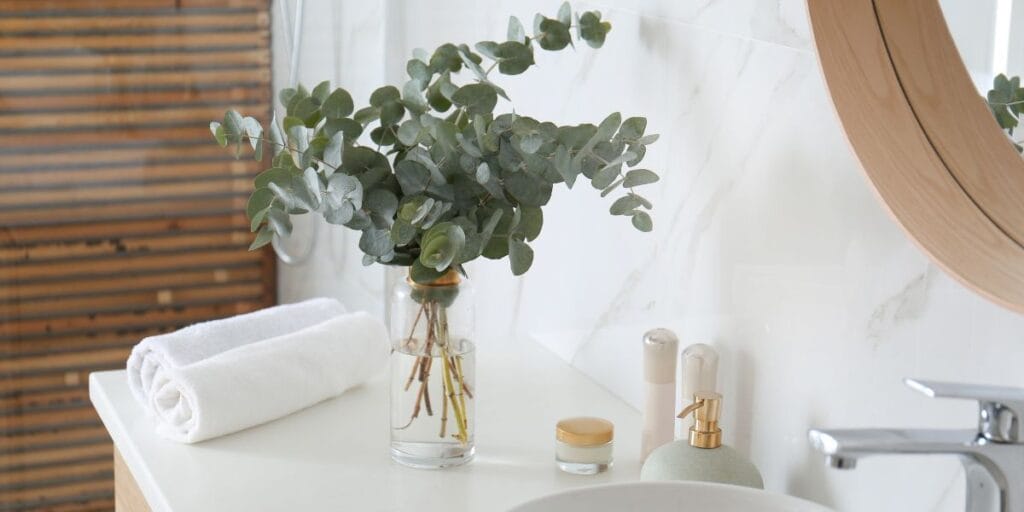
Bathroom shelves are ideal for plants that thrive in moisture-rich environments. Position them on open shelves, above the toilet, or near the sink where they can benefit from the room’s natural humidity.
Ferns and peace lilies are wonderful examples for this space because they naturally thrive in humid conditions. Adding these leafy friends is a simple way to make your bathroom feel more like a relaxing, spa-inspired sanctuary.
11. Build Your Own Living Wall
A living wall is one of the most striking ways to bring greenery into your home because it turns an entire surface into a beautiful design feature. It works best on wide, open walls where you can arrange your plants in a tidy grid or a lovely cascading pattern.
This setup is especially great for converted garages or large living rooms with plenty of wall space that’s just waiting for a bit of life.
We know a living wall might seem like a big project, but it’s actually a rewarding creative adventure! If you’re curious about how to get started, checking out a quick tutorial on YouTube is a wonderful first step. You might just enjoy the process as much as the final result.
12. Use Negative Space to Make Plants Stand Out More
Not every surface needs a plant. Leaving empty space around your greenery allows each plant to feel more important and visually impactful. Overcrowding reduces the effect and makes even beautiful plants look messy.
For example, one well-placed plant on a console table with open space around it feels more premium than multiple small items packed together. This is a key principle in home decor with plants because contrast creates focus. Remember, fewer plants often result in a stronger visual impact.
Complete Your Room With Indoor Plants
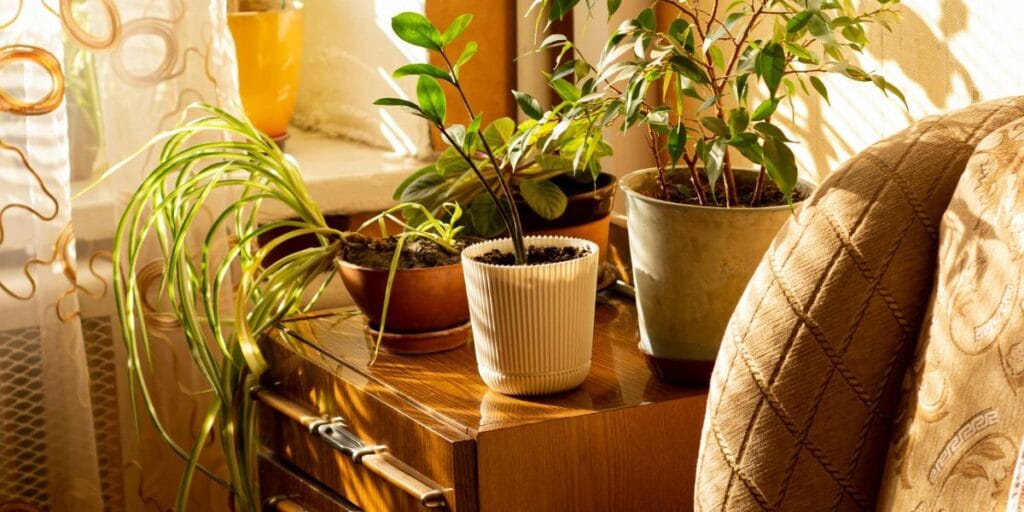
Styling with plants is less about filling space and more about shaping how a room feels. When you understand where to place indoor plants, you start to see every corner, surface, and wall as an opportunity to add balance, texture, and visual interest.
The best indoor plant decor ideas are not complicated setups, but thoughtful placements that match the scale and purpose of each area. With the right placement, plants do not just decorate a space. They complete it.