

13 Smart Ways to Cool a Room Without AC During Hot Summer Days in the Philippines
Stay cool this summer without relying on air conditioning. We’ve rounded up the best ways to lower your room’s temperature fast without a massive electric bill—including the right way to position your fan.
By:
The Good Home Daily
Posted on April 16, 2026
Summer in the Philippines can be intense. Just recently, PAGASA declared a “danger” level heat index of up to 51°C in several areas. With temperatures this high, staying indoors is often the safest option. But what if your room has become hotter than the outside? How can you cool a room naturally?
Yes, air conditioning can solve the problem quickly. But what if you do not have an AC unit, or you simply want to avoid high electricity costs?
Don’t worry; it is still possible to stay comfortable without relying on AC. With just a few practical adjustments, you can reduce heat in a room, improve airflow, and keep your space cool without an air conditioner.
But First, Why Is My Room So Hot Even With a Fan On

A fan can make you feel cooler, but it does not actually lower the temperature in your room. It only moves air around. So, if the air in your room is already warm, your fan is just circulating heat. This is exactly why the room feels hot even with a fan on.
Poor airflow and insulation are the most common culprits. Without proper ventilation, hot air gets trapped inside, especially in smaller spaces. This makes it harder to cool down a hot room fast because there is no fresh air coming in to replace the heat. In this environment, a fan just makes you feel like you’re standing in front of a hairdryer.
Of course, sunlight exposure plays a massive role. Rooms that receive direct sunlight absorb and hold heat through windows and walls. Without blocking this heat source, it becomes nearly impossible to keep a room cool without an air conditioner, no matter how strong your fan is.
Finally, your indoor heat sources add to the problem. You may not realize it, but your appliances, lighting, and even electronics give off heat while in use. Over time, these small sources build up and increase your room’s temperature.
Without a plan to cool down a house naturally, that fan is just a spinning reminder of how hot it really is.
13 Smart Ways to Cool a Room Without AC
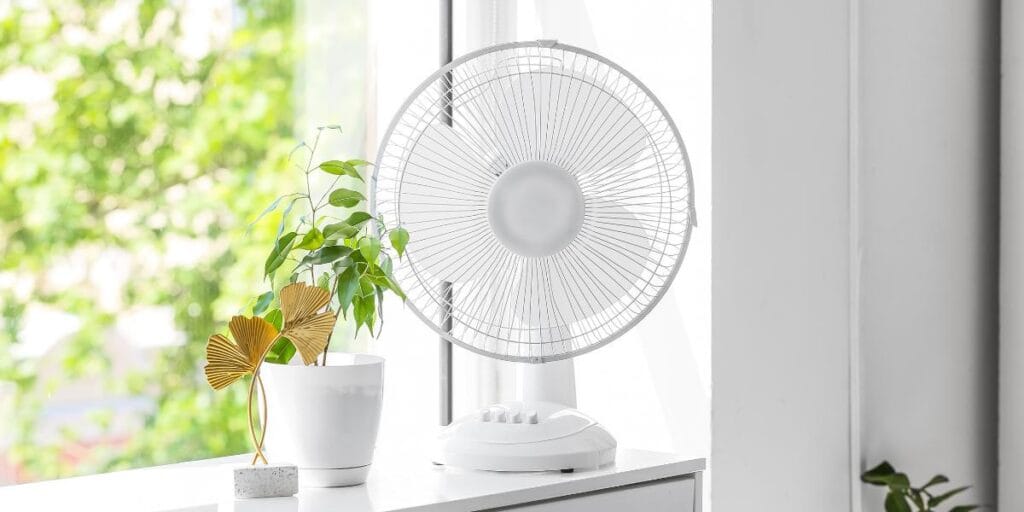
Since we know a fan alone isn’t enough to cool a room hot room, we need to find more practical summer cooling tips for apartments and houses to actively lower the temperature.
Here are simple tips you can follow to keep your room cool without an air conditioner, even during the hottest days.
1. Create Cross Ventilation
Cross ventilation is one of the most effective ways to cool a room naturally. It works by letting fresh air enter from one side of the room while pushing hot air out through another.
So how does it work? Cross ventilation happens when air enters from one opening and exits through another, usually from opposite sides of the room. As cooler air comes in, it forces the warmer air to move out, creating a natural circulation. This steady movement of air is what helps cool a room.
To create this, open windows or doors on opposite or adjacent sides of your space. This allows air to flow straight through the room instead of getting trapped. If possible, open both a window and a door to give hot air a clear exit path.
This setup works best in rooms with windows or openings on opposite or adjacent walls, where air can move freely across the space. For example, a bedroom with a window and a door that leads to a ventilated area can benefit from steady airflow and will feel noticeably cooler.
2. Position Your Fan Properly
Many people turn on a fan and expect the room to cool down, but without proper placement, it simply moves hot air around.
As mentioned, a fan does not lower the temperature, but it supports airflow. When positioned correctly, it can help push hot air out or pull cooler air in, making it easier to cool down a hot room fast.
Place your fan near a window, facing outward during the hottest part of the day to expel hot air from the room. On the other hand, if the air outside is cooler, position the fan to face inward to draw fresh air inside.
Fan height and direction also matter. Since hot air rises, angling your fan slightly upward can help move trapped heat out, especially in the afternoon.
However, if your room has limited openings, the effect may be weaker since the air has nowhere to go. In that case, combining proper fan placement with better ventilation will yield better results.
3. Use Multiple Fans to Create Airflow
This cooling tip is ideal for a room with limited ventilation. The goal of using multiple fans is not just to create stronger airflow, but also to build a clear path for hot air to exit and cooler air to circulate.
Ideally, place one fan near a window to pull cooler air in and another on the opposite side to push warm air out. However, if your room has no window and only a door, you can still create airflow by placing one fan facing the door to push hot air out while another fan circulates air inside the room.
4. Close Windows During Peak Heat Hours
While opening windows helps with airflow, timing is important when trying to cool a room without AC. During peak heat hours, usually late morning to mid-afternoon, the outside air is often hotter than indoor air and can actually increase the temperature in the room.
To reduce heat in a room, keep windows closed during these hours to block hot air from entering, especially if your room gets direct sunlight or has poor insulation.
Once temperatures drop in the late afternoon or evening, open the windows again to release trapped heat and refresh your home with cooler air.
5. Block Heat from Windows
Use different window attachments to block heat before it even enters your space. Since sunlight is a major source of indoor heat, reducing direct exposure can significantly help keep a room cool throughout the day.
You can do this using blackout curtains, reflective window films, or insulated cellular shades. These window treatments help block or reflect sunlight, preventing heat buildup, especially during peak afternoon hours.
According to the US Department of Energy, cellular shades can cut solar heat coming through windows by up to 60%, and when properly fitted, they can reduce overall solar heat gain to around 20%. Research also indicates that medium-toned curtains with white backing materials can lower heat gain by roughly one-third.
6. Switch to LED Lights
After limiting heat from outside, it is also important to look at what is generating heat inside your room. Lighting may seem minor, but it can contribute to indoor temperature, especially when used for long hours. Switching to LED lights can help you reduce heat in a room.
All lights produce some heat, but the difference lies in how much energy is wasted as heat. Traditional incandescent bulbs release about 90% of their energy as heat. On the other hand, LED lights use almost half of their energy (45%) for illumination and emit significantly less heat (55%).
This change is especially noticeable in smaller rooms or areas with multiple light sources, where heat can build up quickly.
7. Turn Off Unused Appliances
Beyond lighting, everyday appliances can quietly add heat to your room. Devices like TVs, laptops, and chargers continue to release heat while in use.
Even when they seem small, these heat sources can build up over time, especially in enclosed spaces. Turning off and unplugging unused devices is a simple way to reduce heat in a room and keep your space more comfortable throughout the day.
8. Avoid Cooking Indoors During Peak Heat
After minimizing heat from appliances, it is also important to consider everyday activities that generate heat. Cooking, especially using stoves or ovens, can quickly raise the temperature and make it harder to cool a room.
During peak heat hours, try to limit indoor cooking or shift it to earlier in the morning or later in the evening when temperatures are lower. This helps keep your space more comfortable and prevents unnecessary heat buildup during the hottest part of the day.
9. Add Indoor Plants
If you want a more natural way to improve comfort, adding indoor plants can help create a cooler-feeling space. While they are not a direct cooling solution, they can still make your environment feel more comfortable.
Plants release moisture through a process called transpiration, which can slightly cool the surrounding air. Studies also suggest that rooms with plants can improve how people perceive temperature, with occupants reporting up to 12% better thermal comfort and being significantly more likely to feel comfortable compared to spaces without plants.
That said, the effect is subtle and works best when combined with proper airflow and heat control. Alongside other cooling tips in this guide, indoor plants can help make your space feel fresher and more relaxing.
10. Choose Breathable Fabrics
One often overlooked way to stay comfortable in hot weather is by paying attention to the fabrics you use inside your room. While it does not directly cool a room, it can significantly affect how hot or cool the space feels to you.
Heavy materials like thick polyester tend to trap heat and reduce airflow, making the room feel warmer. In contrast, lightweight and breathable fabrics such as cotton and linen allow better air circulation and help your body stay cooler, especially during sleep.
This applies not only to bedding, but also to curtains, pillow covers, and upholstery. Choosing the right materials can make your room feel less stuffy, especially at night when comfort matters most.
11. Try a DIY Air Cooler Using Ice
This is one of the most popular frugal summer cooling tips worth trying. The setup is simple: place a bucket, basin, or styrofoam box filled with ice or frozen water bottles, then position a fan so it blows air directly over the ice. This helps create a cooler breeze that can cool down a hot room fast, especially in small spaces.
This DIY hack has become so popular across the internet that even tech experts like CNET have demonstrated their own versions. While it does not replace air conditioning, it is a simple and low-cost way to get quick relief during peak summer heat.
12. Use Dehumidifier
A dehumidifier is often used to help prevent mold and excess moisture buildup in a room. But it can also make a room cooler in summer, although not in the way you might initially think.
Instead of lowering the actual temperature, a dehumidifier reduces humidity in the air. This matters because high humidity makes a room feel warmer and heavier than it really is. By removing excess moisture, the air feels lighter and more comfortable, which helps improve overall indoor comfort.
Keep in mind, however, that this method is only effective in enclosed or poorly ventilated rooms where moisture tends to build up quickly.
13. Bonus Tip: Cool Yourself Down
Unlike the previous tips, this one is not about changing your room setup or improving airflow. Instead, it focuses on what you can do to your own body to feel cooler.
One of the most effective ways is to take a cold or lukewarm bath before sleeping. This helps lower your body temperature and makes it easier to relax, especially during hot and humid nights. It can improve comfort even if the room itself still feels warm.
If a full bath is not possible, you can run cold water over pulse points like your wrists, neck, or feet. These areas help regulate body temperature, so cooling them down can give quick relief and help your body transition into a more restful state.
While this does not change the temperature of your room, it is a practical way to support better comfort and sleep during extreme heat.
Stay Cool and Safe this Summer
According to PAGASA, the hottest month of 2026 is expected to be around May, but even as early as mid-April, many areas are already experiencing intense and uncomfortable temperatures. It is a clear reminder that the warm season is well underway.
We hope these simple and practical tips help you stay more comfortable even without air conditioning. While each method may seem small on its own, combining them can make a real difference in your everyday comfort.
Most importantly, do not forget to stay hydrated and take breaks when needed. With the increased risk of fire during the dry season, be extra careful with heat sources at home and keep your fire-safety equipment ready. Stay vigilant and keep safe during these extreme heat conditions.