

Why Does Your Bedroom Feel Off Even If It Looks Good? 10 Design Rules You Are Probably Breaking Without Realizing
Why does your bedroom feel uncomfortable even when it looks complete? These 10 overlooked bedroom design rules might explain what is missing.
By:
The Good Home Daily
Posted on May 25, 2026
Designing your bedroom should be both intentional and deeply personal, reflecting your unique lifestyle, routines, and personality. However, while there are endless bedroom layout ideas to explore, there are also essential bedroom design rules that should never be ignored—especially in a space meant for rest and relaxation.
Your bedroom should feel like a sanctuary the moment you walk in. A poor layout, wrong item and furniture placement, or harsh lighting can easily make the space feel stressful instead of relaxing. In fact, these common design mistakes contribute to sleep deprivation, restlessness, and difficulty unwinding at the end of the day.
We don’t want that to happen to you. In this guide, we share the must-follow rules to help you create a functional bedroom design that feels balanced, comfortable, and perfectly suited for everyday living.
10 Bedroom Design Rules You Should Never Ignore
Now for the fun part. Here are some bedroom design rules that can help your space feel more comfortable, functional, and much easier to relax in at the end of the day.
1. Avoid Placing Your Headboard Directly Against a Window

Placing a headboard directly against a window can make the bed feel oddly exposed. Even if the room looks aesthetically pleasing, the setup can sometimes feel less secure and more distracting when trying to rest. Natural light, outside movement, street noise, and even the feeling of being too “open” can affect how relaxed the space feels at night.
Instead, try positioning the bed against a solid wall whenever possible. This creates a stronger visual anchor for the room and helps the bedroom feel calmer and more grounded. It also improves the overall bedroom furniture placement by making the bed feel naturally connected to the layout instead of floating awkwardly near the window.
And let us be honest. Nobody wants to feel like the outside world has front row seats to their sleep.
2. Avoid Placing the Bed Directly in Line With the Door
When your bed faces the door directly, it can create a subtle feeling of exposure that makes it harder to fully relax at night.
In Feng Shui, this is often referred to as the “coffin position,” where the feet point directly toward the door, and is traditionally avoided because it is associated with a feeling of vulnerability.
Interestingly, this idea is not just a cultural belief. A study on sleeping behavior and bed positioning in evolutionary psychology found that humans tend to prefer sleep setups that provide a sense of protection while still allowing awareness of the room.
Avoid placing the bed where your feet point straight toward the doorway. If you have limited space, try offsetting it slightly. Even a small adjustment can help reduce that direct line of sight and make the space feel more balanced and less intense visually.
3. Avoid Placing Your Headboard Too Close to the Door
Now that we have talked about avoiding direct alignment with the door, there is another related mistake that often gets overlooked. Placing your head too close to the doorway can feel just as disruptive.
When your headboard sits right next to the door, you lose that sense of personal space and security while sleeping. It also means any movement, noise, or someone opening the door at night happens right beside your head, which is far from ideal for rest.
Even if the rest of the layout looks fine, this setup can make the bed feel less calm and more reactive to movement outside the room. A few inches of distance can make a noticeable difference in how relaxed the space feels.
4. Avoid Pushing Your Bed Into a Corner
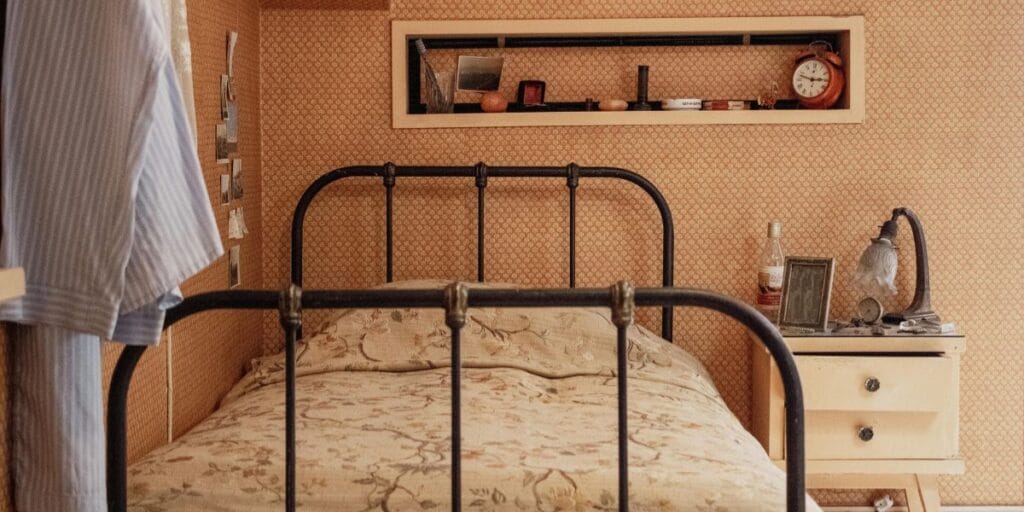
When a bed is pushed against a wall or tucked into a corner, it instantly changes how the space is used. It becomes less practical, especially for couples, since one side of the bed loses easy access. Over time, it can even affect comfort because one person ends up climbing over the other or feeling stuck in place.
Of course, not every bedroom has the luxury of space, and that is completely fine. The key is understanding what matters most to you. If space is limited, you simply make intentional compromises rather than defaulting to the most restrictive setup.
For example, you can build an underbed storage to help maximize space without adding visual clutter. You can also build a custom headboard that can add dimension to the room and function as a ledge.
5. Place Bedside Tables on Both Sides of the Bed
Bedside tables play a key role in how balanced and functional a bedroom feels. The rule of thumb is simple: there should be a surface on both sides of the bed to create a more intentional and well-grounded layout.
This helps establish visual symmetry, making the bed feel like a clear focal point in the room. Without it, a single-sided setup can make the space feel slightly uneven or incomplete.
On a practical level, having a surface on each side keeps everyday essentials within easy reach. Items like your phone, water, glasses, or a small lamp are accessible without needing to stretch across the bed or get up during the night.
It does not have to be a traditional bedside table. A wall-mounted shelf, a small stool, or even a neat stack of books can work. The goal is simply to have a functional surface on both sides of the bed.
6. No Work Tables in the Bedroom

Avoid placing a work table or desk in the bedroom whenever possible. This is probably one of the most ignored bedroom design rules today, especially with the rise of work-from-home setups.
The reason is simple. A desk introduces a completely different energy into the bedroom. If you regularly work from that space, your brain starts associating that corner with emails, deadlines, and low-level stress. Over time, it becomes harder to fully relax in the same room where you are supposed to rest.
If separating your work desk in your bedroom isn’t possible, try to visually separate it instead. The most important thing is to avoid placing the desk in direct view of the bed. This can be done with a cabinet, a folding panel, a curtain, or any simple visual barrier that allows you to “close off” work at the end of the day.
7. Add a Full-Length Mirror, But Place It Carefully
Every bedroom should ideally have a full-length mirror somewhere in the space, unless you already have a walk-in wardrobe where one is built in. It is one of those practical elements that make everyday routines much easier.
Placement is where things really matter. One important rule is to avoid placing mirrors where they are directly visible from the bed. Reflections of movement at night can feel distracting or unsettling, especially in a dark room when the mind is winding down.
A better approach is to create a natural getting-ready zone. For example, placing a full-length mirror behind a door or near the wardrobe works well because it keeps all dressing-related activities in one area.
In smaller bedrooms, mirrors can also help the space feel larger and brighter by reflecting light and creating a sense of depth. This makes them not just functional but also a smart design tool for improving overall bedroom layout and space perception.
8. Layer Your Bedroom Lighting Both Night and Day
Lighting can completely change how a bedroom feels at night. A lot of rooms rely too heavily on one bright overhead light. Don’t do this, as it flattens the space and makes everything feel overly exposed instead of relaxing.
Believe it or not, this also applies to natural light during the day. Direct sunlight can look beautiful, but it also creates harsh shadows, glare, and strong contrast throughout the room.
One of the easiest ways to soften this is by filtering the light through curtains. Sheer curtains can diffuse harsh daylight during the day, while blackout curtains behind them help create darkness and better sleep conditions at night. Having both gives you more flexibility depending on the time of day and the mood you want in the room.
The same layering principle applies to artificial lighting. As mentioned, don’t depend on a single ceiling light alone. Instead, aim five light sources in a standard bedroom, with most positioned closer to eye or head height rather than directly overhead.
This might sound excessive at first, but it becomes much easier when you think about lighting by activity. Bedside lamps, reading lights, vanity lighting, accent lamps, and soft ambient lighting all help create smaller “pools” of light throughout the room instead of one harsh source lighting everything equally.
9. A Rug is a Must in the Bedroom

One of the most underrated bedroom design rules is adding an area rug. A lot of people think rugs are only there to decorate the room once everything else is finished, but they actually play a much bigger role in how a bedroom feels and functions.
Rugs help soften acoustics, add warmth underfoot, and visually shape the layout of the room. In smaller bedrooms, a large rug can connect separate furniture pieces into one cohesive zone, making the space feel less cramped and more expansive. In larger bedrooms, rugs do the opposite by helping break up oversized spaces into cozier and more intimate areas.
They also make a noticeable difference in comfort. If you have cold tile flooring, a rug instantly makes the room feel warmer and softer. Even in carpeted bedrooms, layering a rug can add texture and personality to what might otherwise feel like a flat or featureless floor surface.
When it comes to placement, small rugs on each side of the bed can work well for comfort. But in most cases, a larger rug placed underneath the bed creates a more polished and grounded look. Ideally, the rug should extend beyond the sides of the bed so the room feels more balanced and visually connected.
10. Keep Wall Decor Above the Bed Soft, Calm, and Lightweight
The wall above the bed naturally becomes one of the biggest focal points in the bedroom. Since the bed is already the largest piece of furniture in the room, whatever you place above it instantly draws attention.
Instead of filling the space with multiple small frames or heavy shelving, go for one large statement piece. Oversized artwork usually feels calmer and more balanced compared to a busy cluster of smaller decor.
More importantly, keep the decor lightweight for safety. After all, you are literally sleeping underneath it every night. Canvas prints, tapestries, or lightweight framed art are the ideal wall decor above the bed.
The mood of the artwork matters too. Bedrooms should encourage rest and relaxation, so softer visuals often work best, such as landscapes, abstract pieces, and natural scenes.
For the other bedroom walls, you can be more playful since you are not sleeping directly underneath them.
Why Bedroom Design Matters More Than You Think
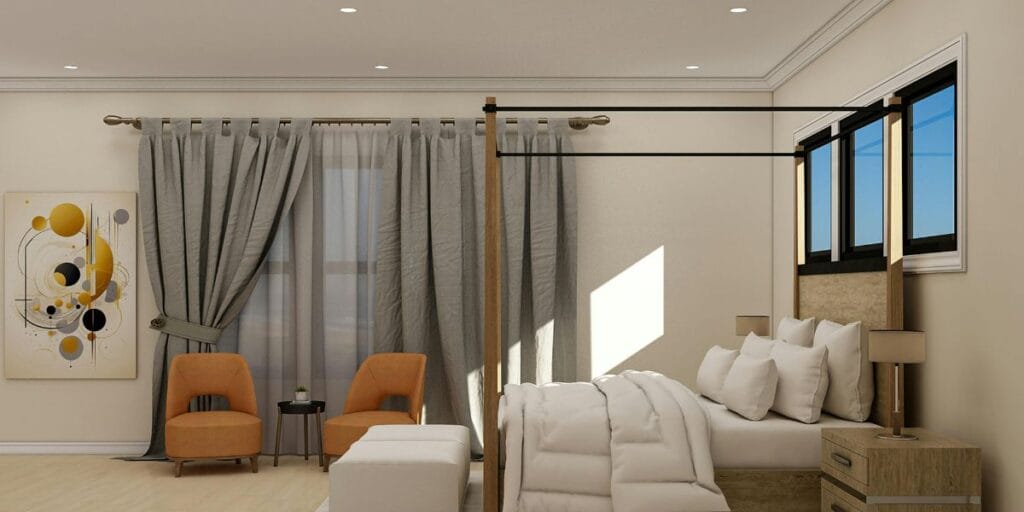
Many homeowners and even professional designers tend to focus more on designing the living room. It makes sense since it is usually the first space guests see. However, the bedroom is the primary driver of sleep quality, which directly impacts daytime productivity and long-term health.
Many design factors affect sleep quality. For instance, the Sleep Foundation highlights guidelines under sleep hygiene. This includes interior design choices such as furniture layout, color selection, clutter control, mattress and bedding choices, and creating a sense of calm within the space. All of these work together to support a more relaxed and restorative sleeping experience.
And it does not stop there. Sleep is also closely tied to what experts call Indoor Environmental Quality or IEQ. This covers things like light, sound, smell, temperature, and air quality. In simple terms, it is everything around you inside the room that can either help you relax or keep you restless.
A study by Xu et al. (2021) looked at over a thousand residents in Shanghai and found that when bedrooms were too hot, too cold, or exposed to outside noise through open windows, sleep quality dropped. But when ventilation improved, people slept better. They also found that simple things like bedroom decorations and indoor plants were linked to better sleep hygiene, which shows how even small design choices can make a real difference.
Today, bedrooms are also used for far more than just sleeping. Many people now use their bedrooms for working and studying, reading, and watching movies. Because of this, following proper bedroom design rules for better sleep is not simply about aesthetics. The goal is to create a bedroom that feels calm, balanced, practical, and supportive of everyday living.
This is why following proper bedroom design rules for better sleep is not just about making the room look nice. The goal is to create a space that feels calm, functional, and comfortable enough to support better rest and everyday living.
A well-planned functional bedroom design does more than improve aesthetics. It can directly affect your mood, stress levels, sleep quality, and daily routine. When your bedroom environment supports rest through thoughtful layout, airflow, and visual comfort, it naturally becomes easier to unwind and sleep better at night.
Bedroom Design Rules That Make Your Space Work for You
The bedroom is often one of the most overlooked spaces when it comes to design, even though it is one of the most critical areas in the home. It is where the day begins and ends, and where rest and recovery actually happen. Because of that, how it is designed has a real impact on how you feel every day.
Being creative with your bedroom is absolutely encouraged. However, there are still bedroom design rules that should be followed to make the space more effective for rest. When these basics are in place, your bedroom becomes not just visually pleasing, but genuinely supportive of better sleep and daily comfort.